

No data
- Details
-
Specifications: 3.8cm, 5.1cm, 6.5cm, 7.6cm
Ingredients: 100% Sodium Carboxymethyl Cellulose (CMC) Fiber
Product Introduction: CMC fiber, namely carboxymethyl cellulose fiber, is a high-hygroscopicity fiber material obtained by carboxymethylation modification of cellulose fiber. It has the characteristics of strong hygroscopicity and good gelling property. After absorbing water, the fiber swells rapidly and forms a gel.
Performance Characteristics:
Water Absorption and Retention: It can absorb a large amount of water and firmly lock the water. The carboxymethyl groups in the CMC fiber molecules are hydrophilic groups, which can form a strong hydrogen bond with water molecules. At the same time, the porous structure of the fiber provides a channel for water penetration. Therefore, it has the characteristics of rapid water absorption and high water absorption capacity (usually can absorb water dozens of times its own weight).
Gelation Property: After absorbing water, the fiber swells rapidly. The gelation property helps to form a uniform protective film. The interwoven network structure between the fibers provides a framework support for the gel. The unfolded molecular chains are cross-linked through van der Waals forces, hydrogen bonds, and other interactions, and finally form a three-dimensional network gel structure.
Good Biocompatibility: It can interact well with human tissues and cells, and will not cause obvious immune reactions, inflammatory reactions, or toxic reactions. It can be used safely in the human body and is suitable for various medical and daily chemical applications, including wound dressings that are in direct contact with human tissues and minimally invasive repair materials.
Non-Toxicity and Low Irritation: CMC fiber products have undergone strict quality control and testing, do not contain substances harmful to the human body, and will not cause toxicity or irritation to the human body, so they can be safely used in the medical and daily chemical fields.

Daily Chemical CMC Fiber
Key words:
Product Consulting
+
Recommend products
+

ginate fiber is a functional fiber material made from sodium alginate extracted from brown algae through wet spinning. It is a purely natural green material that is non-toxic, harmless, and biodegradable. It has high hygroscopicity and gelling properties. Alginate fiber can be blended with lyocell fiber, cotton fiber, and bamboo fiber. The seaweed membrane cloth produced from such blending has high strength and is not easy to break; it can absorb residual heavy metals on the skin; it is light in texture and soft to the touch; and it has good moisture retention performance. In addition, it can be applied in fields such as textiles, clothing, medical care, beauty care, and hygiene products, making it a high-value-added functional fiber material.
View Details
CMC fiber, namely carboxymethyl cellulose fiber, is a high-hygroscopicity fiber material obtained by carboxymethylation modification of cellulose fiber. It has the characteristics of strong hygroscopicity and good gelling property. After absorbing water, the fiber swells rapidly and forms a gel.
View Details
Daily Chemical Alginate Needle-Punched Non-Woven Fabric
In the daily chemical field, calcium alginate (needle-punched) non-woven fabric is mainly used as a facial mask base material. It is made from alginate fiber through needle-punching and cutting processes. Its core advantage is that the facial mask base material forms a gel when in contact with essence or normal saline, which fits closely to the skin and provides high moisture retention.
View Details
Alginate Spunlace Non-Woven Fabric
Alginate spunlace non-woven fabric is a functional fiber material non-woven fabric with high hygroscopicity, which is made from sodium alginate through the wet spinning process. Its production process relies on physical entanglement, which is more in line with the needs of naturalness and health. Due to the characteristics of alginate fiber, this product is widely used in the fields of beauty and skin care (facial mask cloth, makeup remover cotton), medical care (medical dressings, wound patch base cloth), and hygiene cleaning (wet wipe base material), and is a non-woven fabric category that combines functionality and safety.
View Details
Copyright©Qingdao Bright Moon Biomedical Materials Co,Ltd
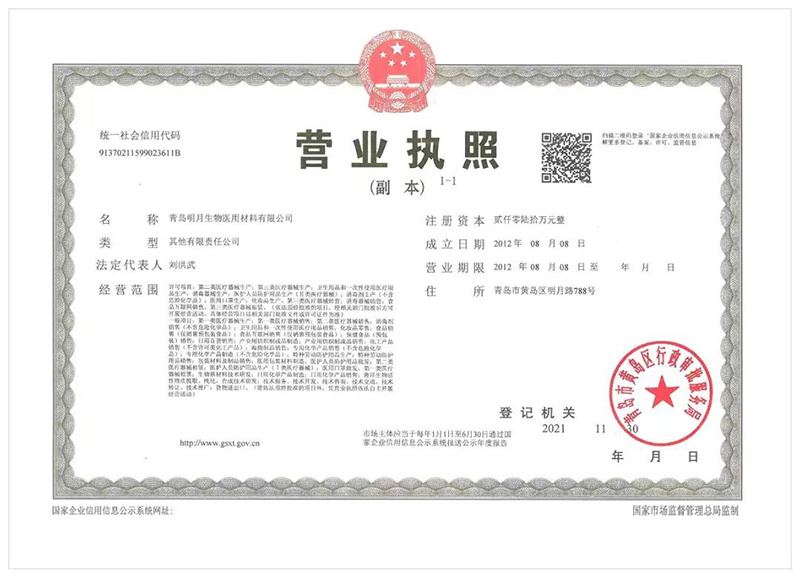
Business License | Powered by www.300.cn | SEO
Copyright©Bright Moon
Business License | Powered by www.300.cn | SEO