

No data
- Details
-
Hydrocolloid dressings are adhesive, moisture-retentive dressings made from a combination of gelatin, pectin, and other materials. They form a gel-like substance when they come into contact with wound exudate, helping to create a moist environment that promotes healing. These dressings are designed for low to moderate exuding wounds, including pressure ulcers, minor burns, and superficial cuts. They offer protection against external contaminants and provide a cushioning effect for comfort.
Features of Hydrocolloid Wound Dressing
◎ Provides a moist wound environment for optimal healing
◎ Highly absorbent, ideal for low to moderate exudate
◎ Self-adhesive and easy to apply without the need for additional bandages
◎ Conforms well to wound shape and body contours
◎ Helps to reduce pain and trauma during dressing changes
◎ Protects against contamination and external friction
◎ Waterproof and offers a barrier to bacteria and other pathogensIntended Use
◎ Designed for low to moderate exuding wounds
◎ Ideal for pressure ulcers, superficial burns, surgical wounds, cuts, and abrasions
◎ Used for wounds in the proliferative phase of healing
◎ Helps prevent friction and protect fragile skin
◎ Suitable for wounds requiring moisture retention for faster healing

Hydrocolloid Wound Dressing
Key words:
Product Consulting
+
Recommend products
+

ginate fiber is a functional fiber material made from sodium alginate extracted from brown algae through wet spinning. It is a purely natural green material that is non-toxic, harmless, and biodegradable. It has high hygroscopicity and gelling properties. Alginate fiber can be blended with lyocell fiber, cotton fiber, and bamboo fiber. The seaweed membrane cloth produced from such blending has high strength and is not easy to break; it can absorb residual heavy metals on the skin; it is light in texture and soft to the touch; and it has good moisture retention performance. In addition, it can be applied in fields such as textiles, clothing, medical care, beauty care, and hygiene products, making it a high-value-added functional fiber material.
View Details
CMC fiber, namely carboxymethyl cellulose fiber, is a high-hygroscopicity fiber material obtained by carboxymethylation modification of cellulose fiber. It has the characteristics of strong hygroscopicity and good gelling property. After absorbing water, the fiber swells rapidly and forms a gel.
View Details
Daily Chemical Alginate Needle-Punched Non-Woven Fabric
In the daily chemical field, calcium alginate (needle-punched) non-woven fabric is mainly used as a facial mask base material. It is made from alginate fiber through needle-punching and cutting processes. Its core advantage is that the facial mask base material forms a gel when in contact with essence or normal saline, which fits closely to the skin and provides high moisture retention.
View Details
Alginate Spunlace Non-Woven Fabric
Alginate spunlace non-woven fabric is a functional fiber material non-woven fabric with high hygroscopicity, which is made from sodium alginate through the wet spinning process. Its production process relies on physical entanglement, which is more in line with the needs of naturalness and health. Due to the characteristics of alginate fiber, this product is widely used in the fields of beauty and skin care (facial mask cloth, makeup remover cotton), medical care (medical dressings, wound patch base cloth), and hygiene cleaning (wet wipe base material), and is a non-woven fabric category that combines functionality and safety.
View Details
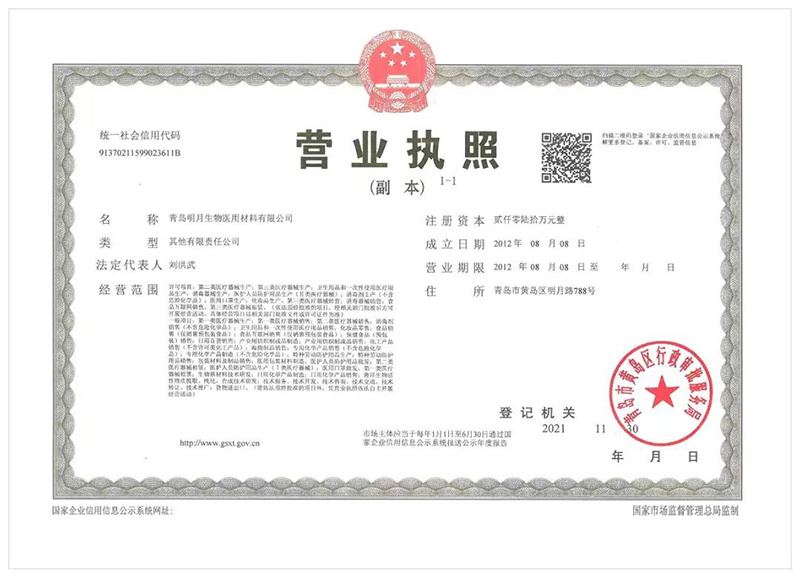
Copyright©Qingdao Bright Moon Biomedical Materials Co,Ltd
Business License | Powered by www.300.cn | SEO
Copyright©Bright Moon
Business License | Powered by www.300.cn | SEO